Jet Lag

“Jet lag isn’t a sleep problem—it’s a timing problem.”
Your brain’s master clock is still in your departure city. Until you shift it, no supplement will fix it.
Light, melatonin timing, and behavior—not willpower—are what actually work.
# ✈️ Jet Lag: What’s Actually Happening in Your Body?
# 🧠 The Physiology (Why Jet Lag Happens)
Jet lag is a circadian rhythm misalignment that occurs after rapid travel across ≥2 time zones. Your internal clock (in the suprachiasmatic nucleus, SCN) is still synced to your departure time zone, while the external environment has shifted.
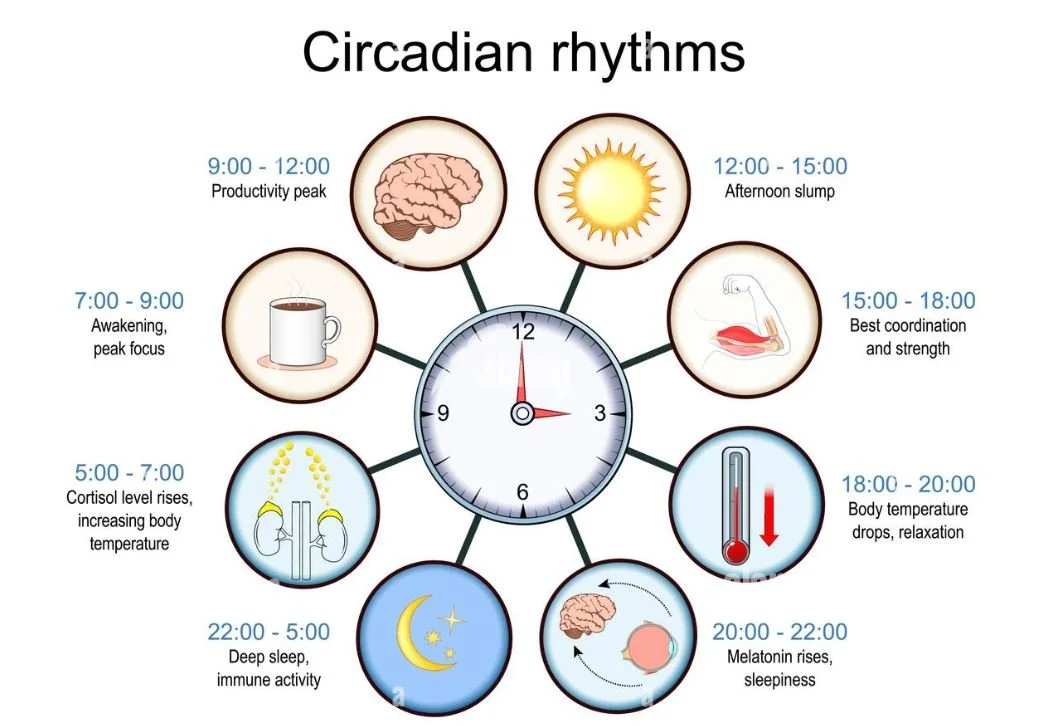
Circadian Rhythm Sleep Disorders:
Our body has a natural clock called circadian rhythm. It plays a role in processes throughout our body. When it doesn’t work right, it can throw us out of sync with sleeping, waking up and time of day. Most of these disorders are treatable, and some are temporary and resolve with simple changes or adjustments.
Key Points:
The circadian system runs on an approximately 24-hour cycle
It is primarily entrained by light exposure
Nearly every organ has peripheral clocks (liver, heart, gut) that rely on coordinated timing
Adjustment typically occurs at about ≈1 hour per day
Eastward travel (phase advance) is generally harder than westward (phase delay)
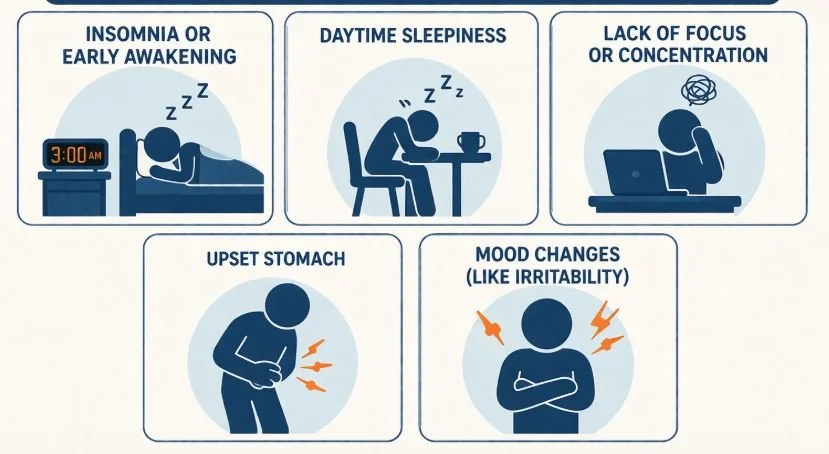
Jet lag symptoms:
Insomnia or early awakening
Daytime sleepiness
Lack of focus or concentration
Upset stomach
Mood changes (like irritability)

How to get over jet lag?
There’s a good chance that symptoms will go away in few days without any treatment. Remember that your body will eventually adjust to the new time zone. Tips that may help jet lag symptoms go away sooner after you arrive at your destination:
1. Focus on getting quality sleep 😴: Melatonin (When Used Correctly)
The American Academy of Sleep Medicine lists timed melatonin as a standard treatment for jet lag disorder. Melatonin works best when correctly timed relative to circadian phase.
Key principles:
Take near target bedtime at destination
Typical effective doses: 0.5–5 mg
Immediate-release appears more effective than slow-release
High doses (>5 mg) are not shown to be more effective and may cause side effects

2.Get some sun 🌞: daylight can jump-start alertness and helps your body recognize it’s time to be awake.
Two things to keep in mind:
A. Eastward travel (harder):
Seek bright light in the morning at destination
Avoid bright light in the evening (sunglasses, dim lighting)
B. Westward travel:
Seek light in the late afternoon/evening
Avoid very early morning light initially
Timing matters—mistimed light can worsen symptoms
3. Manage sleep time ⏱️: make sure to sleep when it’s appropriate to the new schedule. Your flight may be in the air during your destination’s nighttime, so try to log some sleep while airborne.
Short naps— long daytime naps delay nighttime sleep and prolong misalignment, 20–30 minute naps can improve alertness.
4. Drinking Caffeine ☕: Use it strategically. Not all day—just when you need to stay awake.
Can we prevent it?
Travel comes with some inconveniences, such as jet lag.
In the days before your trip, slowly adjust your meal schedule and sleeping schedule to match with your new destination.
When to see a healthcare physician?
Call your Doctor if jet lag symptoms don’t go away or get worse more than a week after traveling.

“Think of jet lag as a brain scheduling problem—
not a sleep problem.
It’s about reprogramming your clock.”
The Takeaway:
Jet lag is a common problem that goes away after a few days. The symptoms of jet lag can be difficult to manage in your first few days of traveling to a different time zone.
Adapting to your new schedule, drinking caffeine during the daytime (only when you need to stay awake), and managing your exposure to light are just a few of the interventions that may help reduce jet lag symptoms.
If you are considering trying melatonin or another sleep aid, talk to your doctor. They will be able to advise you on if it interacts with any of your current medications or is safe for you to take.